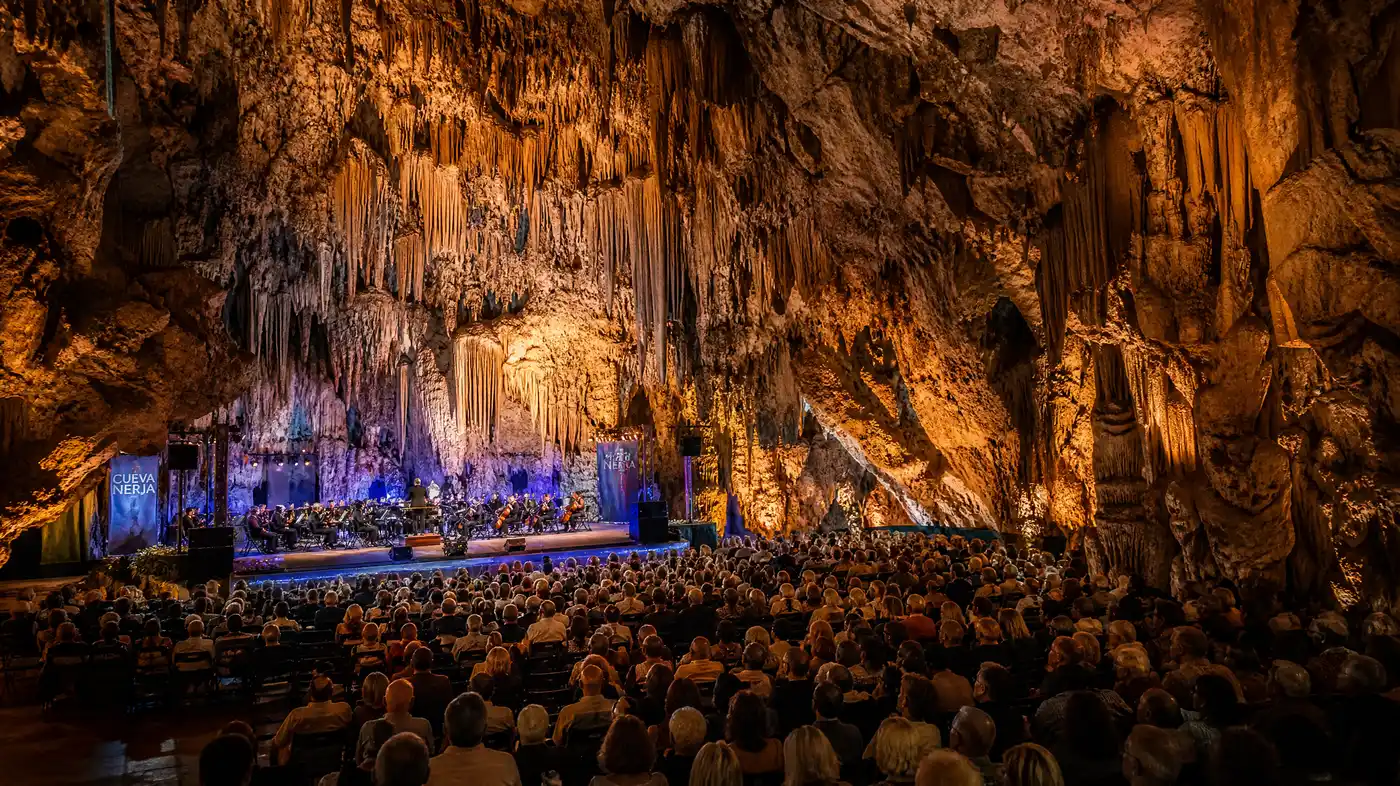
Nerja Caves Concerts and Music Festival
Night falls fast on the cliffs above Maro. You smell pine needles baking in the residual heat of an Andalusian July afternoon, mixed with the sharp salt from the sea below. Somewhere nearby, a violinist runs a bow over open strings, testing the air. Attending the nerja caves concerts is one of those rare European travel experiences where the setting completely eclipses even world-class talent on stage. Whether the notes drift up into the gaping mouth of a limestone cavern or ring out across the outdoor gardens against the backdrop of the Sierra de Almijara, music here simply hits differently.
The annual gathering, known locally as the Festival de Música Cueva de Nerja, has been running for over six decades. It started as a daring celebration shortly after local boys stumbled into the cavern system in 1959. Over the decades it evolved from an intimate underground classical showcase into one of southern Spain's most distinctive summer cultural staples. If you are planning a trip to the Costa del Sol and want to catch an evening show, you need to understand how the festival works today, because things have shifted quite a bit to protect the ancient geology beneath your feet.
Book your nerja caves experience:
The Evolution of the Nerja Cave Music Festival
When five local teenagers crawled through a narrow sinkhole called La Mina back in January 1959, they had no idea they had uncovered millions of years of subterranean history. Just eighteen months later, in June 1960, authorities held the very first official festival inside. Workers laid down a temporary wooden floor in the Sala de la Cascada, rigged up primitive floodlights, and invited the Spanish National Ballet. The dancers leapt beneath stalactites that had taken half a million years to form. It must have been an unbelievable sight, though from a modern conservation perspective it makes geologists wince.
For forty years, legendary performers descended into the belly of the earth. Mstislav Rostropovich brought his cello down there. Montserrat Caballé sang arias that bounced off calcite columns. Paco de Lucía played flamenco guitar runs that left audiences breathless in the damp, cool air. The natural chamber acoustics acted like a subterranean cathedral, carrying sound with a warmth and resonance that sound engineers spend millions trying to replicate in modern concert halls.
Nature, as it turns out, has limits. By the early 2000s, scientists monitoring the cavern atmosphere noticed worrying trends. Five hundred warm bodies breathing in a sealed subterranean chamber raised the ambient temperature by several degrees. Carbon dioxide levels spiked, condensation formed on prehistoric rock art, and green algae began sprouting under artificial stage lights. The foundation running the monument had to make a tough choice. To protect the caves for future generations, they moved the heavy festival schedule above ground.
Note: Most headliner performances for the modern festival take place on the outdoor stage in the cave gardens, not inside the cavern itself. Geologists realized decades ago that hundreds of warm bodies raised the chamber humidity and threatened the fragile prehistoric formations.
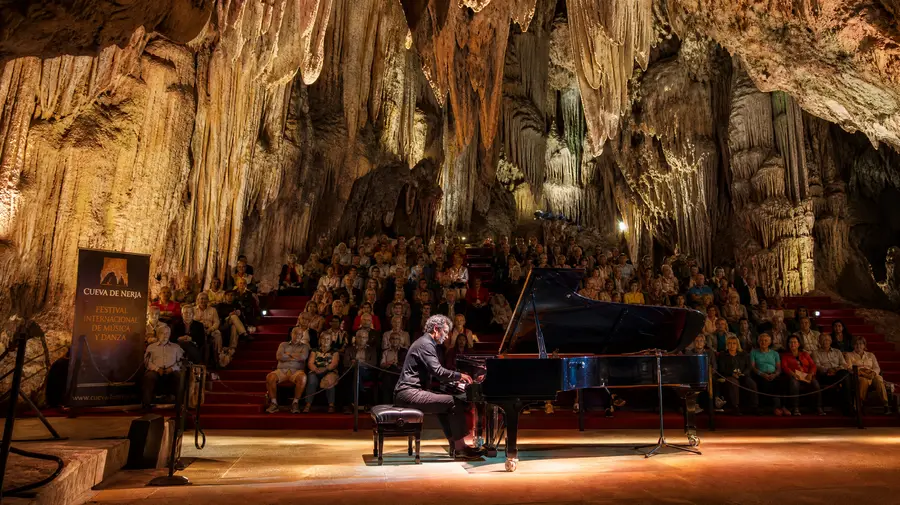
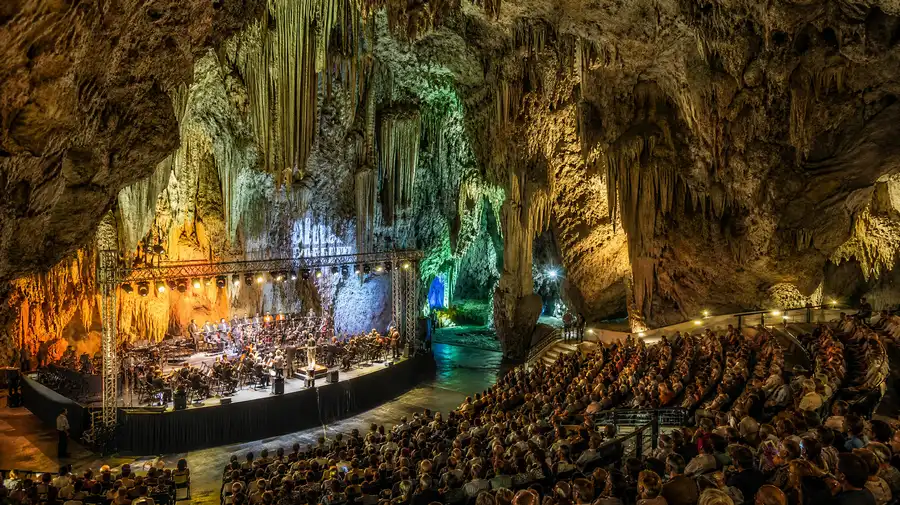
Today, the bulk of the nerja cave music festival happens in the open-air Auditorio Manuel del Campo, set right on the perimeter grounds. You still get the limestone bluffs towering behind the stage and the Mediterranean breeze cutting the evening heat. Very occasionally, special acoustic recitals or chamber sets with strictly limited audiences of about 100 people are arranged inside the actual cave halls, but these are rare treats rather than the default setup.
Atmosphere and Acoustics: Caves of Nerja Concerts
There is something grounding about listening to live strings outdoors after spending your afternoon swimming at Burriana Beach. The outdoor amphitheater holds around 1,700 people, which means every seat feels surprisingly close to the stage. Even during the biggest pop or flamenco shows, you never get that sterile stadium feel. The artists feed on the intimacy of the space. Flamenco singers routinely ditch their microphones for an encore, projecting raw vocal runs straight out toward the dark pine forests.
If you manage to secure access to one of the rare classical recitals inside the Sala del Ballet or Sala de la Cascada, prepare your senses. The cave sits at a permanent 19 degrees Celsius with humidity hovering near 90 percent. When a classical guitarist strikes a chord down there, the sound does not just travel through the air. You feel it in your chest through the damp limestone floor. The natural delay is long and velvety, softening brass instruments and giving soprano voices an almost supernatural sustain. It feels less like sitting in a theater and more like being suspended inside a stone instrument.
Pro tip: If you are lucky enough to catch an underground performance, bring a light denim jacket or wool wrap even in July. That steady 19°C temperature feels genuinely cold after walking in from 34°C afternoon heat.
I remember sitting through an acoustic guitar performance just as dusk turned the surrounding limestone pale blue. The cicadas in the olive trees stopped buzzing right around the time the first notes rang out. It is the sort of quiet you rarely find at major European music festivals anymore.
Nerja Caves Concerts 2025 and 2026: Program Styles and Venues
The festival typically spans several weekends between late June and mid-August. Planning ahead for the nerja caves concerts 2025 or looking out toward the nerja caves concerts 2026 season requires knowing what kind of music appears on the roster. The organizers balance traditional Spanish performing arts with mainstream crossover talent.
Modern editions bring a vibrant mix of genres. One Friday might feature raw flamenco from artists like Sara Baras or Miguel Poveda, while the next night hosts an international symphonic orchestra playing cinematic scores. Later in July, you might see Spanish indie pop acts, classical crossover violinists like Ara Malikian, or legendary vocalists. The program changes each year, but the structure remains steady: weekend evening shows, starting late around 10:00 PM or 10:30 PM to let the fierce southern Spanish sun dip well below the horizon.
| Stage / Setting | Location | Capacity | Typical Performance Type | Atmosphere |
|---|---|---|---|---|
| Auditorio Manuel del Campo | Outdoor Cave Gardens | ~1,700 seats | Flamenco, pop, rock, full orchestras | Warm evening breeze, starlit, lively |
| Sala de la Cascada | Inside the Cave | Strictly limited (~100 seats) | Chamber music, solo acoustic guitar, vocal duos | Cool (19°C), solemn, cathedral acoustics |
| Centro Cultural Villa de Nerja | Nerja Town Center | ~350 seats | Off-festival recitals, youth competitions | Traditional indoor theater, air-conditioned |
For visitors eyeing the nerja caves concerts 2026 calendar, announcements typically drop between February and April of that year. Spanish concert programming tends to solidify later in spring than Anglo-Saxon festivals, so do not panic if the July lineup looks bare in January. Keep checking the foundation's official bulletin boards, as tickets for the top-tier Spanish headliners often vanish within 48 hours of release.
Book your nerja caves experience:
Booking Seats and Ticketing Logistics
Buying tickets for caves of nerja concerts is straightforward if you move quickly once dates are public. General tickets for standard cave visits follow a completely different pricing and entry system than festival tickets. If you just want to see the rock formations during the day, check our detailed guide on Nerja Caves tickets for regular admission prices and discounts. Festival passes, on the other hand, cover only the evening performance and do not include a daytime tourist tour of the underground galleries unless specifically bundled as a VIP package.
Ticket prices generally range from about 35 euros for back-tier amphitheater seats up to 85 euros or more for front-row access during high-profile flamenco shows. Chamber performances inside the cave command higher prices due to strict conservation limits on audience size.
- Book through official vendors: Use the official Fundación Cueva de Nerja ticketing portal or authorized partners like El Corte Inglés to avoid inflated reseller markups.
- Pick your rows carefully: The open-air auditorium has good rake, meaning sightlines are clear even from the rear, but seats on the far edges can miss direct audio angles.
- Watch for combo passes: Occasionally, the organizers offer paired tickets that grant daytime cavern admission alongside your evening concert seat.
- Save your ticket on your phone: Mobile barcode scanning at the perimeter gates works reliably, though cellular coverage right by the rock face can dip, so download the PDF beforehand.
Refund policies are notoriously strict in Spain. Unless an artist cancels outright due to illness, summer rain is virtually nonexistent in Malaga during July, so weather cancellations never happen. Buy only what you know you can attend.
Planning Your Concert Evening: Logistics and Practical Advice
The caves sit just outside the hamlet of Maro, roughly four kilometers east of Nerja center. Trying to wing your transport on a festival night is an easy way to spend forty minutes sweating in a traffic jam along the old N-340 coastal highway. With nearly two thousand concertgoers arriving at once, the small rural roundabout leading up to the cave entrance gets choked quickly.
For detailed route options, read our guide on getting to the caves from Nerja or Malaga. If you drive yourself, arrive at least an hour before gate opening. The primary paved parking lot fills early with staff and VIP badge holders, leaving latecomers to navigate dusty terraced dirt fields further down the hill. Navigating back down those unlit gravel terraces in dress shoes after midnight is not fun.
- Arrival timing: Aim to reach the site by 8:30 PM for a 10:00 PM show so you can park smoothly and grab a cold drink before queues build.
- Dinner strategy: Eat tapas early in Maro or Nerja before heading up, because food options inside the festival perimeter are limited to basic snack bars, sandwiches, and beer stands.
- Footwear choices: Leave high heels at the hotel. You will walk across gravel pathways, stone steps, and uneven outdoor pavement between the entrance and the auditorium.
- Cash versus card: The festival drink stands accept contactless card payments, but signal blackouts happen when crowds peak, so carrying 20 or 30 euros in cash saves headaches.
- Return transport: Taxis line up near the main road after the show, but demand outstrips supply tenfold; arrange a private pickup or take the dedicated shuttle bus if one is running that season.
Local restaurants in Maro village, just a ten-minute downhill walk from the cave entrance, offer a peaceful pre-concert stop. Sitting on a terrace with fried boquerones and cold Cruzcampo beer beats sitting in parking lot gridlock every single time.
Frequently Asked Questions about nerja caves concerts
Are the festival concerts held inside the cave or outdoors?
Most performances take place on the outdoor stage at the Auditorio Manuel del Campo in the cave gardens. This open-air setup protects the cave's delicate microclimate from heat, moisture, and vibrations. Only rare, specialized acoustic recitals with very small audiences are held inside the subterranean galleries.
What should I wear to an evening concert at Nerja Caves?
For outdoor summer shows, smart-casual summer clothes work best, as evening temperatures in July and August linger around 24°C to 27°C. Comfortable flat shoes are recommended for walking on gravel and stone steps. If you attend an indoor cave recital, bring a light sweater or jacket, because the cave interior sits at a constant 19°C year-round.
Can I visit the cave galleries on the night of the concert?
No, standard cave tours close in the late afternoon before the concert gates open. Your concert ticket grants access only to the performance venue and the surrounding garden grounds. If you want to tour the cavern system, book a separate daytime visit.
When is the lineup announced for the upcoming season?
The annual festival program is usually announced in stages between February and April each year. Tickets go on sale shortly after the headliners are made public on the foundation's official website.
How do I get back to Nerja after the show ends?
Shows often wrap up around midnight or later. You can drive your own car, take a pre-booked local taxi, or use the dedicated local festival shuttles when active. Walking back along the dark highway to Nerja is unsafe and not recommended.
Quick Reference
- Main venue: Auditorio Manuel del Campo (gardens outside the cave)
- Season: Weekends from late June through mid-August
- Outdoor capacity: Approximately 1,700 reserved seats
- Cave microclimate: Constant 19°C and 90% humidity
- Typical start time: 10:00 PM or 10:30 PM
Book your nerja caves experience:
Is It Worth It?
There are countless summer music festivals across Spain, but few have this kind of historical weight. Sitting under the stars while an acoustic guitar echoes against ancient cliffs reminds you that people have gathered on this exact hillside for thousands of years. It feels grounded, timeless, and distinctly Andalusian. If your travel dates match the festival calendar, grab a ticket without hesitating. Grab an early dinner in Maro, wander up through the olive trees as the sky turns purple, and let the music do the rest.
Read more about nerja caves.